


Chandelier cleaning in Rochester, NY, presents unique challenges for allergy sufferers during the spring season. As the weather warms, furnaces circulate winter dust while fresh seasonal pollen begins to settle on intricate crystals. You need cleaning methods that protect both your respiratory health and your most important lighting investment.
Chandeliers can cost thousands of dollars. Regular maintenance becomes critical for longevity and proper return on investment. The challenge during spring cleaning lies in removing accumulated allergens without triggering sneezing fits or asthma attacks.
In this piece, you’ll find how to clean crystal chandeliers using allergy-safe techniques and understand which methods trap dust rather than disperse it. You’ll learn when professional chandelier cleaning services make sense and create a maintenance schedule that keeps springtime allergens under control year-round.
How Do You Do Chandelier Cleaning Without Stirring Up Dust?
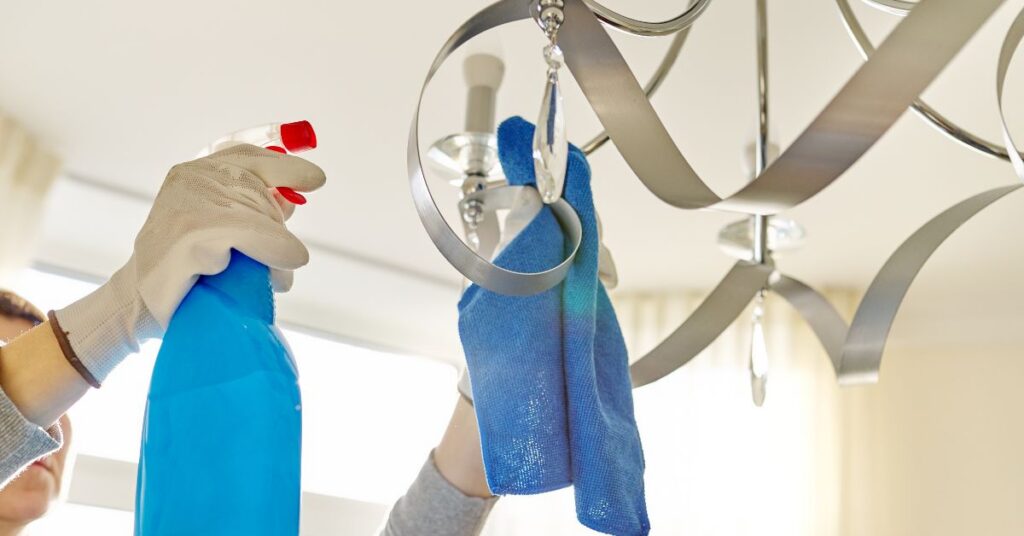
Moisture makes all the difference when it comes to dust accumulation on crystal surfaces. A damp microfiber cloth traps dust particles at—and incoming spring pollen— contact rather than releasing them into the air. Mix one part distilled water with one part isopropyl alcohol in a spray bottle, then mist your cloth. Never spray onto the chandelier. The alcohol component speeds evaporation, while distilled water prevents mineral deposits that attract future dust buildup.
Dry dusting vs. wet chandelier cleaning for allergies
Wet dusting removes dust more than dry methods. Damp cloths trap and lift allergens and bacteria, whereas dry dusting often moves particles around or releases them into the air. Feather dusters push dust into the air where you inhale it.
However, microfiber technology combined with moisture creates a static charge that attracts dust particles. Wet dusting is better for allergy sufferers because the damp cloth prevents particles from becoming airborne. The trade-off involves more time, but breathing comfort during the high-pollen spring months justifies the extra effort.
Our expert team is ready to help
Setting up your allergy-safe cleaning zone
Containment prevents allergen spread to other rooms. Cover the floor beneath your chandelier, extending 3 to 4 feet beyond the fixture’s diameter. Your preparation checklist has:
- Thick drop cloths or moving blankets to catch falling debris
- Plastic sheeting taped over clothes for waterproof protection
- Closed doors to limit airborne particle migration
- Protective mask rated N95 or higher for respiratory defense
Understanding Chandelier Dust and Allergy Triggers
What makes chandelier dust different
Dust accumulation on chandeliers contains components you won’t find on flat surfaces. Dead skin cells are the main ingredient, as humans shed roughly one teaspoon per week (Tovey, 2021). Chandeliers positioned above dining tables or living areas collect these particles without pause.
Intricate crystal designs create multiple surfaces where static electricity attracts and holds dust particles. During spring, these surfaces also trap tree and grass pollen that enters through open windows or follows you inside, binding with pet hair and dander to form stubborn films.
Common allergens that accumulate on crystal fixtures
Dust mites dominate the allergen profile on neglected chandeliers. These microscopic pests feed on dead skin cells and produce enzymes that account for roughly 60 percent of dust allergies. Their proteins become airborne on particles smaller than one millimeter, making your lighting fixtures a hidden source of indoor allergy triggers.
Professional Chandelier Cleaning Service: When to Get Help
Wheezing, chest tightness or sneezing fits during cleaning attempts signal respiratory compromise. Asthma attacks triggered by dust exposure mean professional intervention protects your health better than personal effort. Severe dust mite or seasonal spring allergies require specialized containment that home methods cannot achieve.
Maintenance schedule to reduce future allergen buildup
Schedule professional deep cleaning every six to twelve months. Dust weekly with microfiber tools to prevent heavy accumulation. Dining room fixtures near kitchens need attention every three to four months due to grease exposure.
Protecting Your Health
Allergy-safe chandelier cleaning protects both your respiratory health and your lighting investment. The damp-cloth method keeps allergens trapped rather than airborne. This makes DIY maintenance manageable to most homeowners.
Fixtures that trigger severe reactions or require specialized care need professional services with the right expertise and equipment. Call (585) 454-1120 to get professional assistance from All Seasons Window Cleaning. We’ll help you kick off your spring cleaning right, keeping your chandeliers brilliant and your breathing comfortable year-round.
FAQs
Q1. What’s the most effective way to clean a chandelier without damaging it?
A gentle approach works best. Use a damp microfiber cloth with cleaning solution applied to the cloth rather than spraying the fixture directly. Carefully wipe each crystal or glass piece, then immediately dry it with a second microfiber cloth to prevent streaks and water spots.
Q2. What can I do if my chandelier is too high or hard to reach?
A telescopic cleaning pole with a microfiber attachment can help you reach the fixture from the ground. However, if the chandelier is very large or located on a high ceiling, hiring a professional service is the safest option, as they have specialized equipment and experience with elevated fixtures.
Q3. Do I have to remove a chandelier to clean it properly?
In most cases, you can clean it while it’s installed. Turn off the power and remove the bulbs first. Use a slightly damp microfiber fabric to gently wipe each part. This is especially important during spring to ensure all sticky pollen residue is removed from the crystals. Once everything is completely dry, reinstall the bulbs and turn the power back on.


No comment